
How many restrooms does a farm operation need?
OSHA 1928.110 sets the baseline for agricultural hand-labor employees: one toilet and handwashing facility per 20 workers, reachable within a quarter mile of where people are working. That is different from the construction ratio in OSHA portable toilet requirements, which runs one unit per 20 workers up to 40 workers before adding a urinal. On a spread outside Cheyenne, that quarter mile matters more than the headcount. If your crew works a section a half mile from the yard, one unit at the barn does not satisfy the standard. You need a second unit closer to the field, or you need to move workers back at break time. We talk through crew layout before quoting so the count matches how your land actually gets worked, not just how many people are on payroll. A standard porta potty rental with a 60 to 70 gallon holding tank covers most field crews for a week between services. Larger crews, or ground too far from a road for a service truck, sometimes need a second unit staged closer to work. See how many porta potties do I need for a longer breakdown by crew size. Ranches running seasonal help through Fox Farm-College or South Greeley, both under 4 miles from central Cheyenne, usually route our truck on the same weekly loop as in-town construction stops, which keeps service predictable during peak season.
What does a farm restroom rental cost in Cheyenne?
Pricing depends on unit count, service frequency and how far the site sits from a paved road. A single standard unit runs in the same range as any portable toilet rental job, with delivery priced separately if the site is a longer haul.
| unit | duration | typical price |
|---|---|---|
| standard | day | $150 |
| standard | week | $200 |
| standard | month | $200 |
| delivery_fee | week | $100 |
| service_fee | month | $150 |
Monthly rentals make sense for a harvest season or a full calving cycle; see monthly porta potty rental for how that billing works. Multi-unit setups, ADA units for crews with workers who need one under ADA Standards 213.2, or handwash stations required alongside toilets add to the monthly line. Check porta potty rental cost and porta potty rental per day if you are comparing a short branding weekend against a season-long lease. Farms further out, past Hillsdale at 21.9 miles east, may see a higher delivery fee reflecting drive time. We quote that upfront, not as a surprise on the invoice.
Do farm workers need a handwashing station too?
Yes, if the ratio under OSHA 1928.110 is being met with toilets alone, you still need potable water and handwashing capacity at the same one-per-20 standard. A dedicated handwashing station rental or a portable sink rental satisfies that separately from the toilet unit, and 29 CFR 1910.141(d)2 requires soap and towels or a hand-drying device at wash stations, not sanitizer alone. If your crew handles pesticide or herbicide application, OSHA 1926.51(f)(1) requires washing facilities specifically because of that contaminant exposure, and a sanitizer bottle on the tailgate does not cover it. We pair a sink with the toilet order on most ag jobs so both requirements are handled in one delivery, one weekly service stop, and one invoice. See handwashing station requirements for the fuller rule set. For operations already running a septic system at the farmhouse or a bunkhouse, a residential tank is typically pumped every 3 to 5 years depending on tank size and household count; if that tank is due, bundle a pump-out with your seasonal restroom order through septic pumping service rather than scheduling two separate visits. Grease interceptors at a farm kitchen or processing shed get pumped once contents reach 25 percent of liquid depth; ask about grease trap pumping if that applies to your operation.
What size unit fits a remote field site?
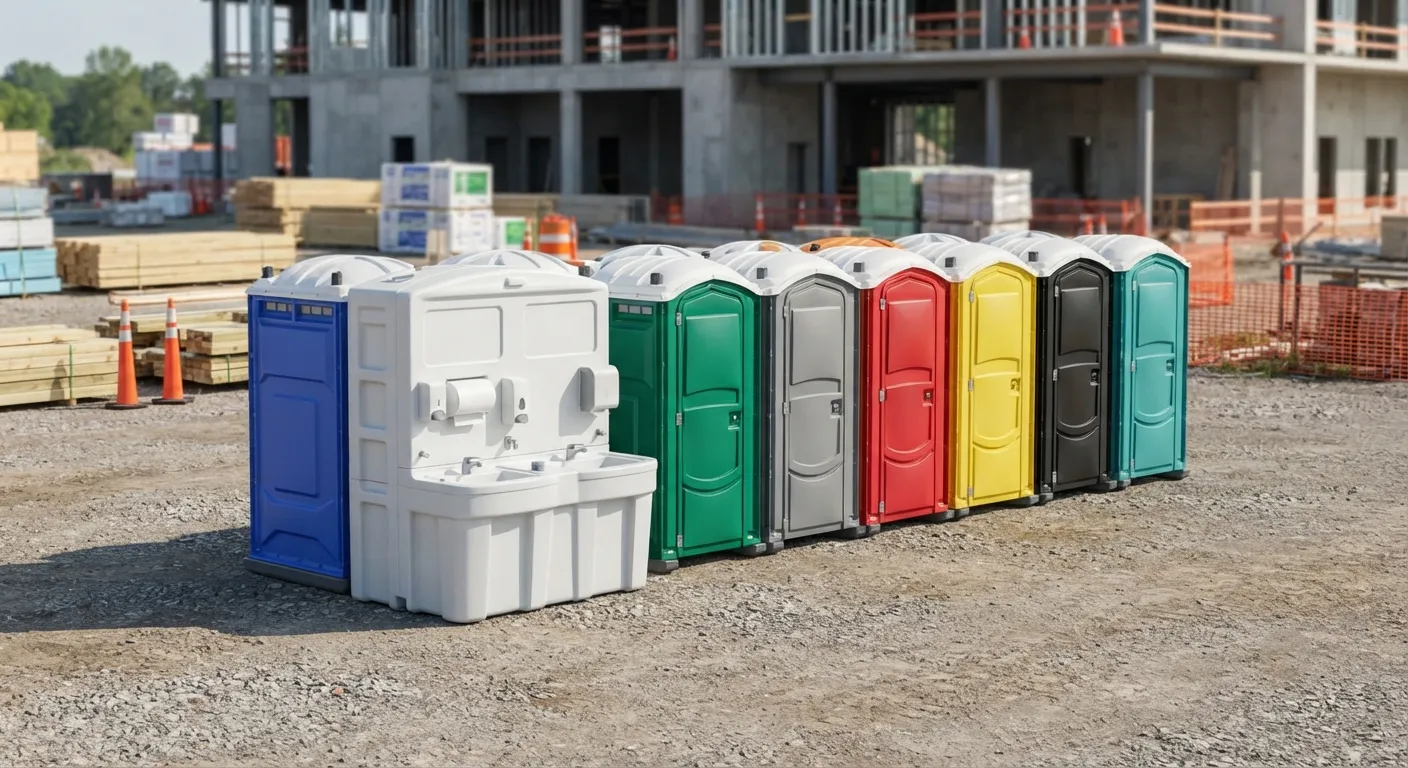
A standard unit measures about 44 by 48 inches on the ground and stands roughly 92 inches tall, small enough for most farm access roads and gate widths. It needs no power or water hookup, which matters when the nearest utility line is a quarter mile off. See standard porta potty rental for full specs.
Can you service units on unpaved ranch roads near Cheyenne?
Yes, our trucks handle gravel and dirt access roads regularly on jobs around Cheyenne. We ask about road condition and gate width before scheduling so the truck arrives on the right day without getting stuck or turned around.
How often do farm restrooms get serviced during harvest?
Weekly is standard under the ANSI/PSAI Z4.3 baseline for units seeing regular use. Heavy crew weeks or added units may need twice-weekly service. We set the schedule around your harvest calendar, not a fixed calendar date.
Do I need an ADA-accessible unit on a farm site?
If any worker needs one, yes. ADA Standards 213.2 requires at least one accessible unit where portable toilets are clustered, even in a rural setting. See ADA accessible porta potty for specs and pricing.
What happens in winter on exposed farm ground?
Units still function, but wind exposure and freezing tanks need extra attention on open ranch land. See porta potty in winter for how we handle service in cold months.
Next step
Get a delivery date
Tell us the address, the dates and the headcount. We size the order and confirm the route.