
How many restrooms does a county fair need in Cheyenne?
Start with attendance, not acreage. A fairground pulling a few thousand people a day needs restrooms spread across the midway, the grandstand, and the barns, not clumped at one entrance. How many porta potties do I need walks through the math, but the short version: one standard unit per 75 to 100 attendees for an eight-hour event day covers steady traffic without long lines. Livestock barns and 4-H areas need their own cluster too, since exhibitors and families camp near animals for hours. OSHA 1926.51(c) sets worker-facing ratios for construction crews, one toilet per 20 workers on site, and while a fair isn't a construction job, it's a useful baseline for staff and vendor restrooms behind the scenes. For public-facing counts, event guidance in OSHA Portable Toilet Requirements breaks down how planners translate that standard into fairground numbers. Every cluster needs at least one accessible unit under ADA Standards 213.2, which requires 5 percent of clustered single-user units to be accessible, never fewer than one. We spec standard units for general crowd flow and add ADA accessible porta potty units at each restroom bank, not just the main one. For a fair running three or four days with heavy weekend crowds, we also price out restroom trailer rental options for VIP areas or sponsor tents, since a trailer holds up better against sustained high traffic than a bank of standalone units.
What restroom setup works best for grandstand and midway crowds?
Grandstands need units close to seating, not a hike away, and midways need units that don't block food truck lanes or emergency access. A standard unit runs about 44 by 48 inches on the ground and stands roughly 92 inches tall, so we walk the site plan before delivery to confirm spacing works with vendor booths and ride footprints. Handwashing matters here too. If your fair includes a demo kitchen, a canning contest, or any spraying of cleaners or pesticides on the grounds, 29 CFR 1910.141(d)2 requires soap and towels or a hand-drying device at wash stations, not sanitizer alone, and OSHA 1926.51(f)(1) applies specifically where crews are applying paints, coatings, herbicides or insecticides. We pair handwashing station rental units near food vendors and animal barns as standard practice. For grandstand seating, we often recommend deluxe flushable porta potty units, since flushable models handle high-frequency use better over a full event day than a basic standard unit. Barricades separating restroom clusters from vehicle lanes should meet ANSI D6.1 per OSHA 1926.202, which we account for when we place units near loading zones or livestock trailers. If your fair layout needs traffic control or a defined perimeter, temporary fence rental and crowd control barrier rental both integrate into the same delivery run as the restrooms, which saves a second site visit.
Why does placement matter more than unit count?
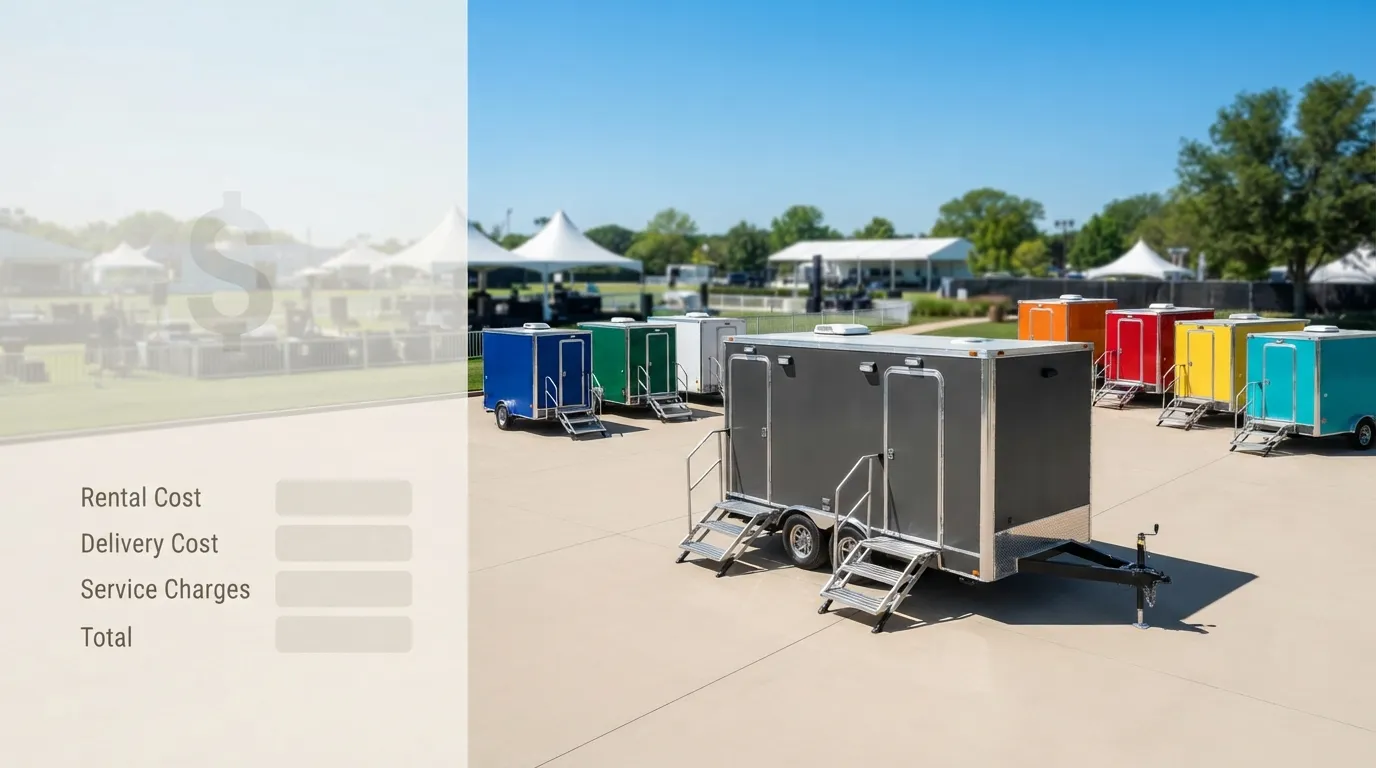
A fair with plenty of units in the wrong spots still gets complaints. Placement drives satisfaction more than raw numbers, because a unit 300 feet from the grandstand might as well not exist to someone standing in line at intermission. We route delivery trucks through the site ahead of setup, and roll-off equipment or trailer deliveries need about 60 feet of straight clearance behind the truck, which matters if your fairground has tight service roads near the barns. Ground surfaces near each unit should stay stable and slip-resistant under ADA Standards 302.1, especially on grass lots that get muddy after a Cheyenne thunderstorm. We check clearance and grade before finalizing the layout, not on delivery day. For fairs held on undeveloped fields at the edge of Cheyenne, we've delivered as far as Hillsdale, about 21.9 miles east, and closer sites like Ranchettes, roughly 9.2 miles north, without extra lead time. If your fairground borders Warren AFB, about 5.0 miles west of Cheyenne, we coordinate around any base access restrictions ahead of setup. See Porta Potty Placement Guide for the full logic on spacing, and check Event Restroom Rental, the cluster hub for this page, for how fair restroom planning connects to festivals, concerts, and other multi-day events across Cheyenne.
| unit | duration | typical price |
|---|---|---|
| standard | event | 400 |
| ada | day | 230 |
| trailer | event | 3500 |
Prices above sit within measured ranges for event-length rentals; a four-day fair often prices as an event package rather than day-by-day. For county-specific permit steps, confirm placement in the public right of way with the city, since Porta Potty Permit Requirements covers what to check before you finalize a site plan.
How far in advance should I book restrooms for a county fair?
Book as soon as your dates are set, ideally two to three months out for multi-day fairs. Grandstand and barn clusters need coordinated delivery, and Request a Quote locks your date before peak fair season fills our schedule.
Do fairgrounds need separate restrooms for livestock areas?
Yes. Exhibitors and families spend hours near barns, so a dedicated cluster there prevents crowding at the main restroom bank. We typically add portable restroom rental units near barns separate from midway units.
Can I add handwashing stations without full restroom units?
Yes, standalone handwashing works well near food vendors and animal areas. Portable sink rental units run alongside restroom clusters, and soap-and-towel setups meet 29 CFR 1910.141(d)(2) requirements for vendor areas.
What happens if my fair runs longer than planned?
Call us and we extend service, adding pump-outs as needed. Multi-day fairs often need mid-event servicing, which How Often Are Porta Potties Cleaned explains based on usage volume.
Are ADA units required at every restroom cluster or just one?
Every cluster needs at least one accessible unit under ADA Standards 213.2. A fairground with three restroom banks needs three ADA units, not one for the whole event.
Next step
Get a delivery date
Tell us the address, the dates and the headcount. We size the order and confirm the route.