
What Do We Provide During a Disaster Response?
Fast deployment matters more than the fine print during an emergency, so we lead with what moves first: standard porta potty rental units, handwashing station rental setups, and holding tank rental for sites where septic lines are down. A standard unit holds a 60 to 70 gallon tank and stands about 92 inches tall, small enough to stage in a parking lot, a church lot or a school gym turned shelter. For crews working a wider footprint, we bring in portable restroom rental blocks sized to headcount rather than guesswork.
Water service disruption is the piece people forget. OSHA 1926.51(a)(1) requires an adequate supply of potable water at any place of employment, and that requirement does not pause because a pipe broke. We pair toilets with portable sink rental units and, where soap and drying are required under 29 CFR 1910.141(d)(2), we stock towel dispensers because hand sanitizer alone does not meet that standard. If contamination involves anything closer to a chemical spill, hand sanitizer station rental units get added as a supplement, never a substitute.
Shelters need accessible units too. We stage ADA accessible porta potty placements per ADA Standards 213.2, which requires at least 5 percent of clustered single-user units to be accessible, with a minimum of one no matter how small the cluster. Debris cleanup crews get roll-off dumpster rental service dispatched alongside toilets, since storm debris and sanitation needs usually land on the same call.
How Fast Can Emergency Units Reach a Cheyenne Site?
Response speed depends on distance and road access, and most Cheyenne deployments move within the same day. Our dispatch radius covers Fox Farm-College 2.0 miles south, South Greeley 3.6 miles south, Warren AFB 5.0 miles west, and Ranchettes 9.2 miles north, with Hillsdale reachable at 21.9 miles east for county-level response. A roll-off delivery needs about 60 feet of straight clearance behind the truck, so we ask a dispatcher, not a shelter volunteer, to confirm site access before the truck rolls.
For sites where road damage or flooding blocks a standard route, we coordinate placement with whoever is managing the response, whether that is a county office or an on-site incident commander. Our emergency porta potty rental line exists for exactly this: calls that cannot wait for a normal quote cycle. If a septic system backs up under stress from extra shelter population, our emergency septic service crews handle pump-outs the same day where access allows. We also run porta potty rental cheyenne as our main dispatch hub for anyone searching mid-crisis rather than browsing.
Placement in the public right of way during an emergency still needs confirming with the city; that rule does not disappear because the situation is urgent. We check with Cheyenne's relevant department before setting anything on a street or sidewalk rather than a private lot.
What Does Emergency Sanitation Cost During a Disaster?
Emergency pricing runs on the same bands as planned rentals, with day and weekend rates covering short-notice response and weekly or monthly rates applying once a shelter operation runs longer.
| unit | day | week | month |
|---|---|---|---|
| standard | $100-$350 | $130-$500 | $125-$325 |
| ada | $200-$400 | n/a | n/a |
| dumpster | $51-$112 | $426-$778 | n/a |
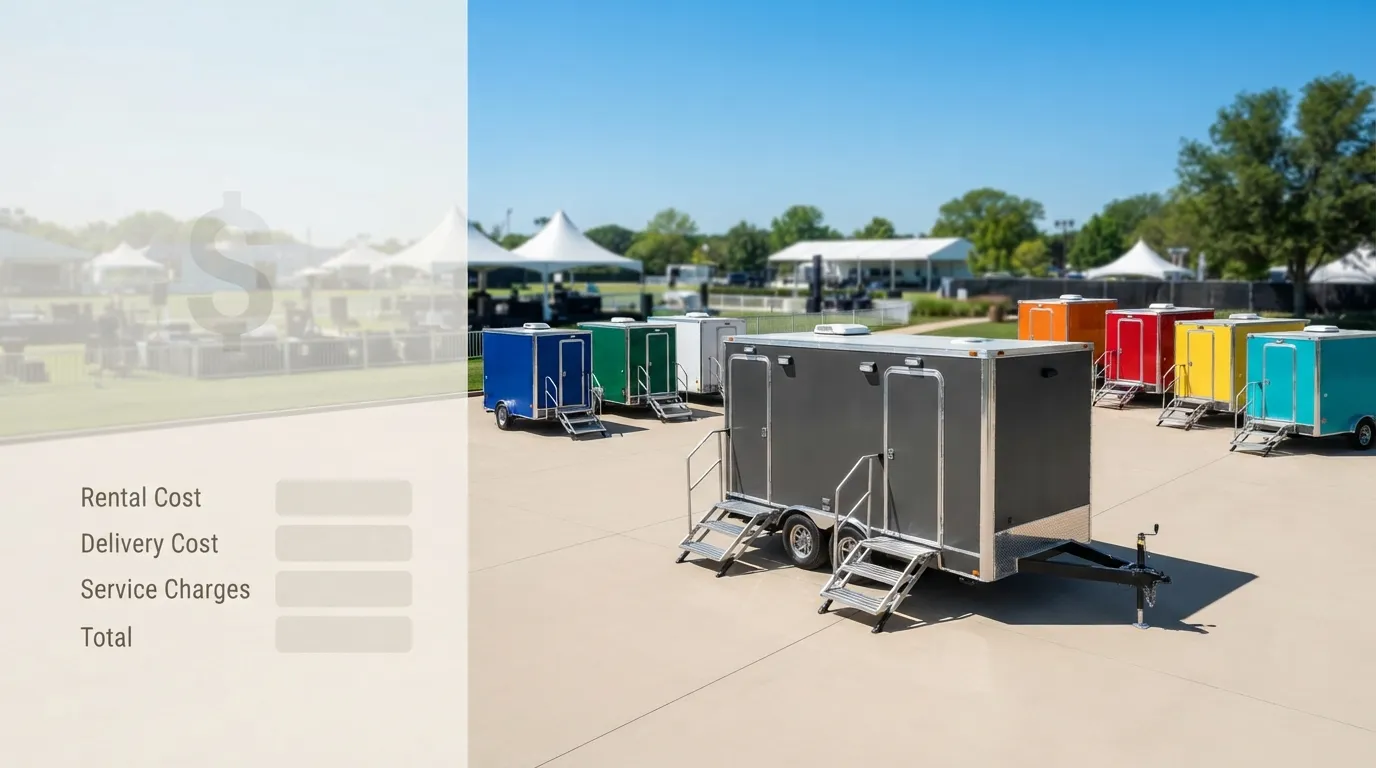
A delivery fee applies on top of unit cost, typically $100 to $500 for a day dispatch depending on distance and access. Weekend emergency response, common for storms that hit on a Friday, runs $125 to $400 for a standard unit rented that way. For agencies coordinating a multi-week shelter, our monthly porta potty rental page breaks down the longer-term math, and porta potty rental cost covers how delivery, service and unit fees stack for planning budgets. If a septic tank on site needs a full pump rather than a rental swap, septic tank pumping cost lays out that separate price band.
Agencies coordinating a response across multiple counties can request a combined quote through request a quote, which lets us line up standard units, dumpsters and handwashing stations under one call instead of three.
How many toilets does a shelter need?
OSHA 1926.51(c) sets 1 toilet per 20 workers on a jobsite, but shelters are populations, not crews. We plan closer to one unit per 20 to 25 occupants and adjust once headcount is confirmed, since shelter populations shift hour to hour during active response.
Can you deliver on a weekend or holiday?
Yes. Emergency dispatch does not wait for a business day. Weekend and holiday delivery costs more than a weekday call, and we quote that rate up front so a shelter coordinator can budget it before the truck leaves.
Do you provide handwashing separate from toilets?
Yes. Shelters and cleanup crews often need handwashing station rental units placed apart from toilets, especially near food service tables, and we size that separately from restroom counts.
What if flooding blocks normal truck access?
We coordinate with whoever manages site access, whether county emergency management or property staff, and reroute delivery once a clear path opens. A 60 foot clearance behind the truck is still needed for roll-off units.
Do you serve areas outside Cheyenne proper?
Yes, within our standard dispatch radius. See service areas for the full list, including Fox Farm-College, South Greeley, Warren AFB, Ranchettes and Hillsdale.
Next step
Get a delivery date
Tell us the address, the dates and the headcount. We size the order and confirm the route.