How many ADA units does a Cheyenne site need?
Start with the 5 percent rule from ADA Standards section 213.2 and round up, not down. A site with four standard units still needs one accessible unit, because the standard never lets the count fall to zero. Larger festival layouts and county fair grounds scale the same way: 20 standard units means at least one ADA unit, and most planners add more once foot traffic and wait times get factored in. This is separate from the OSHA 1926.51(c) worker-count ratios that govern construction sites, which set toilet numbers by crew size rather than accessibility. If you're staffing a build site in Cheyenne, check both rules side by side using our OSHA portable toilet requirements guide before you order. For general placement logic across unit types, our porta potty placement guide walks through spacing and ground clearance too. Most contractors and event planners find it faster to run the numbers with our how many porta potties do I need worksheet, then confirm the accessible count separately.
What makes a portable restroom ADA accessible?
An accessible unit is bigger, wider-doored, and built around reach and turning space, not just a ramp. ADA Standards section 404.2.3 sets a 32 inch minimum clear door opening, wider than what fits on a standard 44 by 48 inch unit. Inside, ADA Standards section 304.3.1 requires a 60 inch turning circle so a wheelchair user can rotate fully without backing out the door. Standards 308.2.1 caps the forward reach range at 48 inches high and 15 inches low, which is why accessible units mount the paper dispenser and any shelf lower than a standard unit does. Door hardware falls under section 309.4: it has to work with one hand, no tight pinching or twisting, and no more than 5 pounds of force. Floors are held to section 302.1, meaning stable, firm, and slip resistant, which matters through a Cheyenne winter more than most places. Our ADA accessible porta potty page has the full spec sheet if you want dimensions before you order.
Where do ADA units need to sit on site?
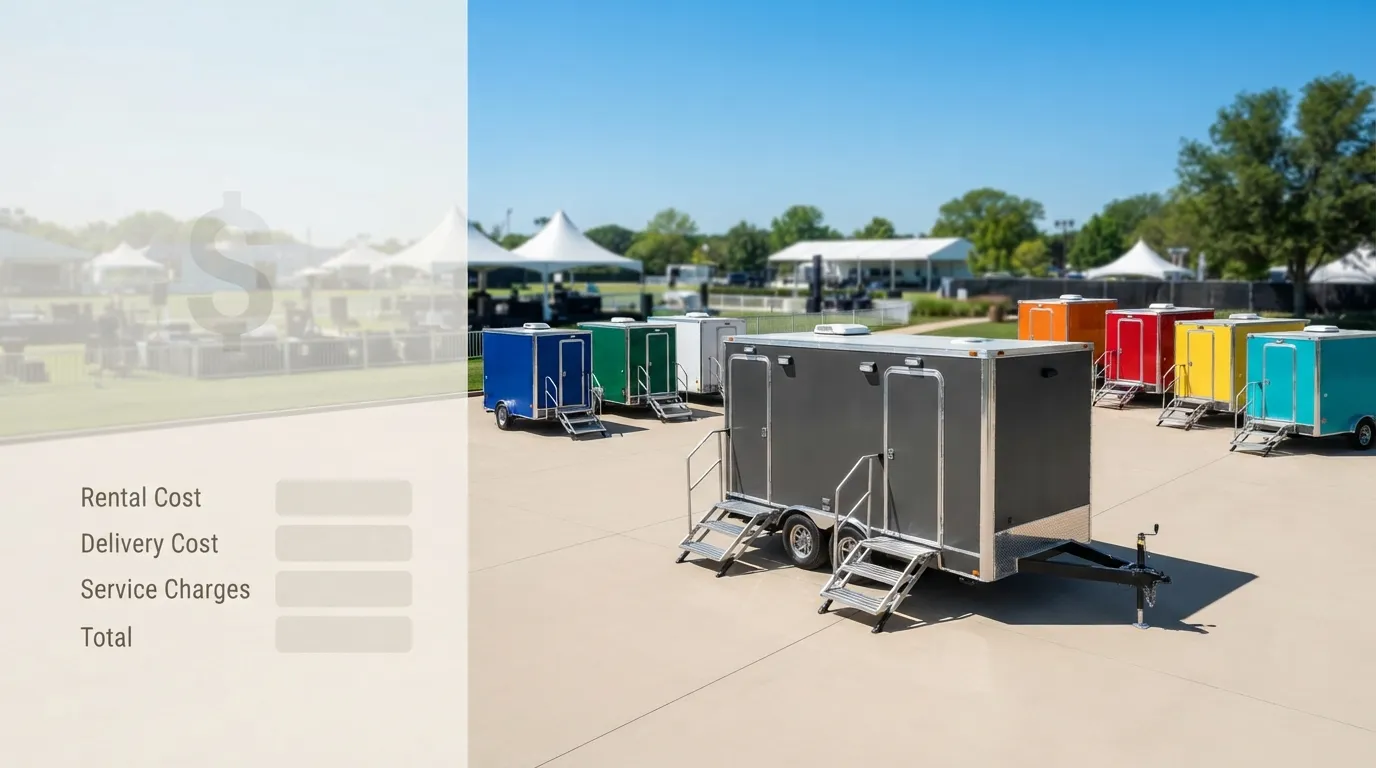
The path to the unit matters as much as the unit itself. ADA Standards section 403.5.1 sets a 36 inch minimum clear width for the accessible route, so gravel ruts, cords, or fence lines can't pinch that path down. If the ground isn't level, any ramp built to reach the unit has to follow section 405.2, a maximum 1:12 running slope, which takes real distance to achieve on sloped Cheyenne lots. Plan the route before delivery day, not after. Our porta potty placement guide covers clearance for both delivery trucks and accessible paths, and if you're renting a restroom trailer rental instead of a single unit, the same route width rules apply at the ramp and doorway. For construction sites layered with a temporary fence rental or a light tower rental, keep the accessible path clear of both when you sketch the layout.
Do event and construction sites in Cheyenne need the same ADA setup?
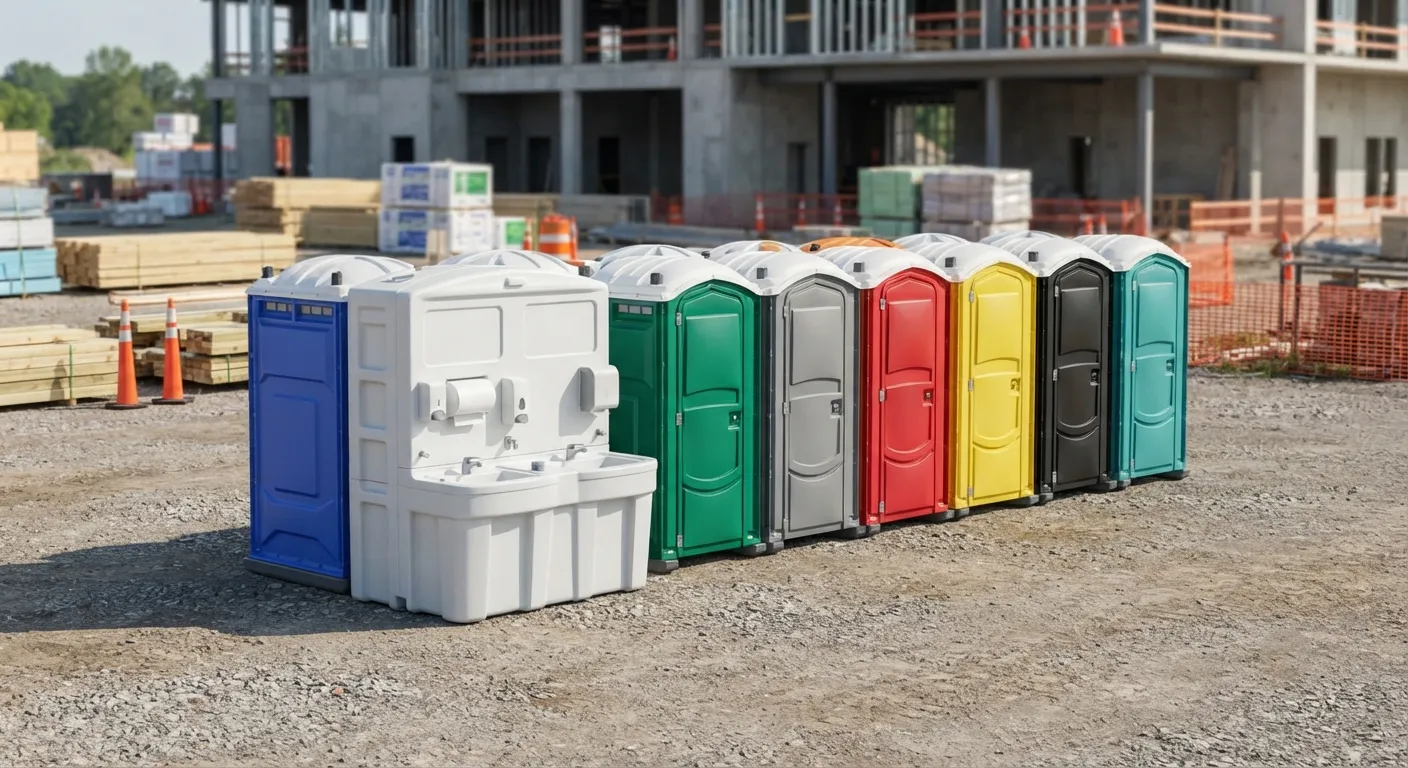
Both need at least one accessible unit per cluster, but the surrounding rules diverge. Construction sites layer ADA accessibility on top of OSHA 1926.51(c) toilet ratios, which scale by crew size: one toilet seat for 20 workers or fewer, then additional seats as the crew grows past 20 and past 200. Event sites in Cheyenne, from a wedding restroom rental to a festival restroom rental or a race route booked through marathon and race restrooms, size mainly around attendance and hours, then apply the same 5 percent accessible minimum. If your event also needs a washing setup, note that 29 CFR 1910.141(d)(2) requires soap and towels or a hand-drying device at any washing facility, hand sanitizer alone doesn't satisfy it; our handwashing station rental page covers compliant setups. Placement in the public right of way for a Cheyenne street event or sidewalk closure needs confirming with the city before delivery, since permit specifics vary by location and use.
| unit | duration | typical price |
|---|---|---|
| ada | day | $230 |
| ada | week | $185 |
| ada | weekend | $240 |
Delivery within roughly 2.0 to 9.2 miles of central Cheyenne, covering areas like Fox Farm-College and Ranchettes, is usually straightforward to schedule; ask about delivery fees when you book. See porta potty rental cost for how ADA pricing compares against standard units, or ADA accessible porta potty for unit specs.
Do I need an ADA unit if I only rent one porta potty?
Yes. The 5 percent rule in ADA Standards 213.2 never rounds to zero, so a single-unit rental for a small Cheyenne backyard project or short driveway job still needs to be the accessible model if the public or workers with disabilities may use it.
Can a standard unit be modified to meet ADA requirements?
No. Door width, turning space, and reach ranges are structural, not add-ons. A standard unit runs about 44 by 48 inches on the ground, too tight for the 60 inch turning circle ADA Standards 304.3.1 requires. Order a purpose-built ADA accessible porta potty instead.
What is the difference between ADA units and a deluxe flushable unit?
ADA units are sized for accessibility: wider doors, lower reach, a turning circle inside. A deluxe flushable porta potty adds flushing and a sink but isn't necessarily ADA-compliant on dimensions unless specified as both.
Does a restroom trailer need ADA accommodations too?
Often yes, especially for public events. Our 8 stall restroom trailer and 4 stall restroom trailer options can include an ADA-compliant stall with the same 32 inch door and turning space rules as standalone units.
Who decides how many ADA units a Cheyenne job site needs?
The site planner or general contractor applies ADA Standards 213.2 alongside OSHA 1926.51(c) worker ratios. Cheyenne Porta Pros can help count both during a request a quote call so nothing gets missed before delivery.
Next step
Get a delivery date
Tell us the address, the dates and the headcount. We size the order and confirm the route.